Badminton, often referred to as “the racquet sport,” is gaining popularity in India due to its perfect blend of physical exercise, competitive spirit, and sheer fun. Whether you’re a complete novice or just beginning your badminton journey, this comprehensive guide is designed to equip you with the essential skills and knowledge to excel in this fantastic sport.
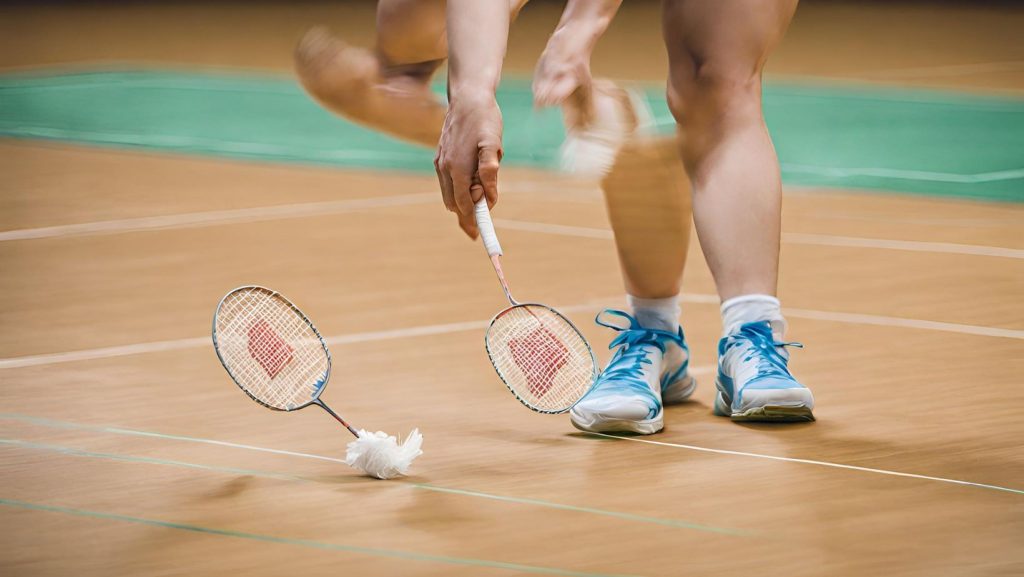
In this article, we will delve into understanding the equipment and court layout, mastering the crucial racket-holding techniques, implementing effective serving strategies, getting familiar with the rules, scoring, and fouls in badminton. Additionally, we’ll offer valuable tips tailored specifically for beginners to enhance their gameplay and hone their skills.
Before diving into gameplay, let’s familiarize ourselves with the equipment and court layout in badminton.
To start playing badminton, you’ll need the following equipment:
Racket: Badminton rackets are lightweight and are typically crafted from materials such as carbon fiber or aluminum. Choose a racket that feels comfortable in your grip and complements your playing style.
Shuttlecock: The shuttlecock, often called the birdie, is a cone-shaped projectile with a skirt made of feathers or plastic. It’s designed to provide stability and ensure precise aerodynamics during play.
Indoor Court: Badminton is primarily played indoors due to its susceptibility to wind interference. The court is rectangular and is divided into two equal halves by a net. Adequate lighting and enough space to move around freely are essential.
A badminton court consists of various boundary lines and areas. Here’s a breakdown of the court layout:
Singles Court: The singles court is narrower compared to the doubles court. The boundary lines define different areas, including the back boundary lines, sidelines, and centerline.
Doubles Court: The doubles court is wider to accommodate two players on each side. Additional boundary lines for doubles play include the long service lines and wider back boundary lines.
Now that we have laid a solid foundation, let’s progress to the vital aspects of mastering the racket-holding techniques.
One of the fundamental elements of playing badminton is mastering the correct grip and racket-holding techniques. How you hold the racket directly influences your control, power, and accuracy when hitting the shuttlecock. Let’s explore essential techniques for holding the racket correctly:
Forehand Grip: The forehand grip is the most commonly used grip in badminton. It provides versatility and allows for effective shots both at the front and back of the court. Here’s how to achieve the forehand grip:
Backhand Grip: Mastering the backhand grip is essential for executing powerful and accurate shots. Here’s how to achieve the backhand grip:
Serve Grip: The serve grip is crucial for delivering accurate and controlled serves. Here’s how to achieve the optimal serve grip:
Mastering these holding techniques is essential to develop strong foundational skills in badminton. The proper grip empowers you to execute various shots effectively and maintain control over the game. Next, let’s delve into serving strategies to gain an advantage on the court.
The serve is a critical aspect of badminton, as it determines the start of each rally and offers an opportunity to gain an advantage over your opponent. Employing effective serving strategies can apply pressure on your opponent and set the tone for the game. Here are some key serving strategies to consider:
Short Serve: The short serve involves hitting the shuttlecock in a way that it falls closer to the net on your opponent’s side. This type of serve aims to limit your opponent’s options and creates an opportunity for an attacking shot.
Long Serve: The long serve aims to push your opponent towards the back boundary line and gain a positional advantage. It requires more power and accuracy.
Flick Serve: The flick serve is a deceptive technique that tricks your opponent into believing you’re executing a short serve when, in fact, you’re delivering a long serve.
By implementing these well-thought-out serving strategies, you can gain an immediate advantage and seize control of the game. However, it is crucial to familiarize yourself with the regulations, scoring system, and potential infractions in badminton to uphold the principles of fair competition.
Let’s explore the key aspects:
Scoring System: Badminton follows a rally-point scoring system, which means a point is scored on every rally, regardless of which player served. The standard scoring system is as follows:
Service Rules: Proper serving is essential in badminton to ensure fair play and equal opportunities for both players. Here are some key service rules to keep in mind:
Faults and Fouls: Certain actions or violations can result in faults or fouls. Here are some common ones to avoid:
By adhering to these badminton rules and avoiding fouls, you ensure fair play and create a conducive environment for competitive badminton. However, as a beginner, it’s natural to have questions and seek additional tips to improve your gameplay. Let’s explore some valuable tips specifically tailored for beginners.
Focus on Footwork: Developing good footwork is essential in badminton, as it allows you to move swiftly around the court and position yourself for better shots. Practice various footwork drills to improve your agility and responsiveness.
Consistency over Power: While power is important, focus on developing consistent and accurate shots. Precision and control will ultimately contribute to your success in the game.
Practice Basic Shots: Mastering the basic shots, such as the clear, drop shot, smash, and net shot, will form the foundation of your gameplay. Dedicate time to practicing these shots and gradually incorporate more advanced techniques.
Engage in Fitness Training: Badminton demands stamina, speed, and agility. Incorporate fitness training exercises that prioritize cardiovascular endurance, strength, and flexibility, leading to improved performance on the badminton court.
Seek Professional Guidance: Consider taking lessons from a qualified badminton coach or joining a local badminton club. Professional guidance and regular practice sessions will accelerate your learning and help you progress faster.
To sum it up, badminton is an intriguing sport that encompasses physical fitness, skill refinement, and engaging sports competition. By understanding the basics, including equipment and court layout, mastering essential techniques, employing effective serving strategies, and adhering to the rules, beginners can embark on an exciting badminton journey. So grab your racket, lace up your shoes, and get ready to conquer the badminton court!